
Delving into How Interior Design Impacts Mental Health at Home, this introduction immerses readers in a unique and compelling narrative, providing a captivating overview of how the design of our living spaces can profoundly influence our mental well-being. From the colors we choose to the organization of our surroundings, each element plays a crucial role in shaping our emotions and creating a harmonious environment.
Importance of Interior Design
Interior design plays a crucial role in influencing our mental health and overall well-being, especially in our homes where we spend a significant amount of time. The way our living spaces are designed can have a profound impact on our emotions, mood, and stress levels.Creating a peaceful and harmonious environment through thoughtful design choices can contribute to a sense of calm and relaxation, ultimately improving mental health.
Here are some ways in which interior design can influence emotions and well-being at home:
Color Psychology
- Colors have the power to evoke different emotions. For example, warm tones like red and orange can create a sense of energy and excitement, while cool tones like blue and green are known for their calming effects.
- Choosing the right color palette for each room can help regulate emotions and promote relaxation.
Natural Light and Ventilation
- Natural light is essential for maintaining a healthy circadian rhythm and improving mood. Rooms that are well-lit with natural light can enhance productivity and reduce feelings of anxiety.
- Proper ventilation not only improves air quality but also contributes to a sense of freshness and well-being in the space.
Clutter-Free Spaces
- A clutter-free environment can have a positive impact on mental health by reducing feelings of stress and overwhelm.
- Organized spaces promote a sense of order and control, leading to increased focus and productivity.
Color Psychology
When it comes to interior design, the choice of colors plays a significant role in influencing our mental health and well-being. Different colors have the power to evoke various emotions and affect our mood in different ways.One color that is often associated with promoting relaxation is blue.
Blue has a calming effect on the mind and body, making it an excellent choice for bedrooms or spaces where you want to unwind and de-stress. Green is another color that can bring a sense of tranquility and harmony, making it ideal for areas where you want to feel refreshed and rejuvenated.On the other hand, colors like yellow and orange are known to promote creativity and energy.
These warm tones can stimulate the mind and inspire creativity, making them great choices for home offices or creative spaces.When it comes to creating a desired atmosphere, color schemes play a crucial role. By combining different colors strategically, you can create a harmonious and balanced environment that suits your needs.
For example, pairing a calming blue with a warm neutral like beige can create a serene and comforting atmosphere, perfect for a living room or relaxation space. Experimenting with different color combinations allows you to tailor your home environment to support your mental health and well-being.
Lighting Effects
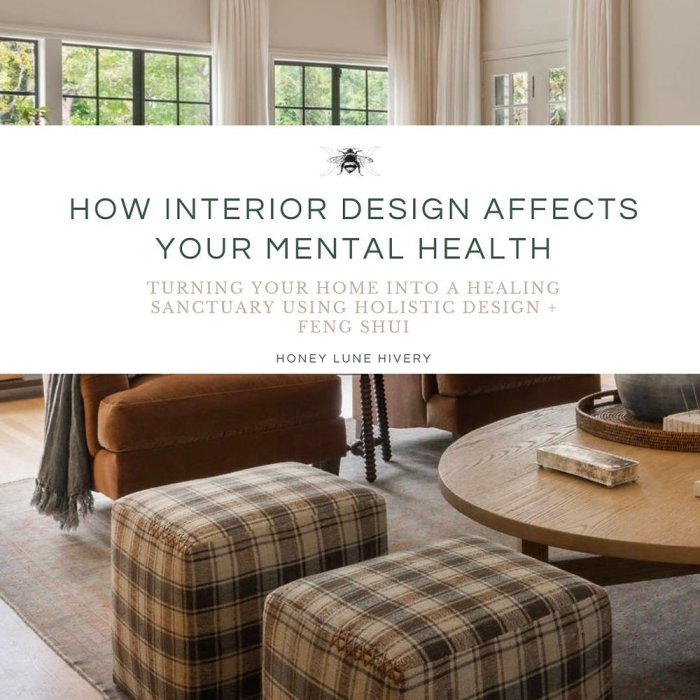
Lighting plays a crucial role in interior design, especially when it comes to impacting mental health. One key aspect is the importance of natural light in interior spaces, as it can have a significant effect on our well-being.
Lighting can also greatly affect mood and productivity. Bright, natural light has been shown to improve mood, increase energy levels, and enhance productivity. On the other hand, poor lighting conditions, such as dim or harsh lighting, can lead to eye strain, headaches, and even exacerbate symptoms of depression.
Optimizing Lighting for Mental Well-being
- Aim to maximize natural light in your space by keeping windows unobstructed and using light, sheer curtains to allow natural light to filter through.
- Consider incorporating different types of lighting, such as ambient, task, and accent lighting, to create a well-balanced and adaptable lighting scheme.
- Use adjustable lighting fixtures to control the intensity and color temperature of light to suit various activities and moods throughout the day.
- Opt for warmer color temperatures for relaxation areas and cooler color temperatures for workspaces to promote focus and concentration.
- Ensure proper placement of lighting sources to reduce glare and shadows, creating a comfortable and visually appealing environment.
Organization and Clutter
Maintaining an organized living space is crucial for promoting good mental health. Clutter in the home can lead to feelings of overwhelm, stress, and anxiety, impacting overall well-being.
Relationship Between Clutter and Mental Health
Clutter can cause cognitive overload, making it difficult to focus and relax in a space. It can also trigger feelings of guilt or embarrassment, further exacerbating mental health issues. Studies have shown a direct link between clutter and increased levels of cortisol, the stress hormone, in individuals.
Strategies for Organizing Spaces
- Start small: Tackle one area at a time to avoid feeling overwhelmed.
- Declutter regularly: Get rid of items that no longer serve a purpose or bring joy.
- Utilize storage solutions: Invest in organization tools like bins, shelves, and baskets to keep items in place.
- Create designated spaces: Assign specific areas for different activities to maintain order.
Benefits of a Well-Organized Home
- Improved mental clarity: A tidy space can help clear the mind and enhance focus.
- Reduced stress and anxiety: Organized surroundings promote a sense of calm and relaxation.
- Enhanced productivity: Clutter-free environments can boost productivity and creativity.
- Promotes healthy habits: A well-organized home can encourage healthier lifestyle choices and routines.
Incorporating Nature Elements
Bringing elements of nature into interior design can have a profound impact on mental health and well-being. The connection with nature has been shown to reduce stress, increase productivity, and promote feelings of calm and relaxation.
Benefits of Plants
- Plants can improve air quality by absorbing pollutants and releasing oxygen, creating a healthier indoor environment.
- Greenery has been linked to reduced anxiety and improved mood, making it a great addition to any space.
- Having plants around can also increase feelings of optimism and overall well-being, contributing to a more positive mindset.
Natural Materials
- Using natural materials like wood, stone, or bamboo in interior design can evoke a sense of warmth and grounding, bringing a touch of the outdoors inside.
- These materials can create a connection to nature, promoting a feeling of harmony and balance in the living environment.
- Natural textures and colors can have a soothing effect on the mind, helping to create a peaceful and serene atmosphere.
Outdoor Views
- Having access to outdoor views from inside the home can provide a sense of openness and connection to the natural world, reducing feelings of confinement and enhancing mental clarity.
- Natural light coming in through windows can boost mood and energy levels, while also regulating the body's circadian rhythm for better sleep.
- Being able to see green spaces or nature scenes from indoors has been associated with lower stress levels and increased feelings of relaxation and well-being.
Wrap-Up
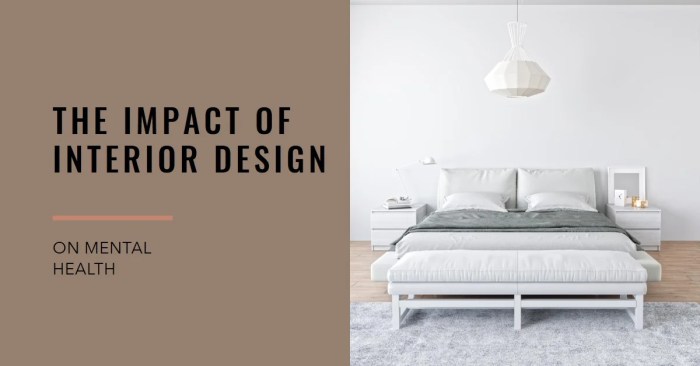
In conclusion, the impact of interior design on mental health at home is undeniable. By understanding how design choices affect our emotions and well-being, we can create spaces that nurture our mental clarity and overall happiness. With a thoughtful approach to color, lighting, organization, and nature elements, our homes can truly become sanctuaries for our minds and souls.
Common Queries
How does color psychology influence mental health in interior design?
Color psychology plays a significant role in influencing our emotions and well-being at home. For example, warm tones like red and yellow can evoke feelings of energy and happiness, while cool tones like blue and green promote calmness and relaxation.
What are some strategies to optimize lighting for mental well-being?
To enhance mental well-being through lighting, maximize natural light by keeping windows unobstructed, use task lighting for focused activities, and incorporate dimmable lights to adjust brightness according to mood.
How can incorporating nature elements impact mental health in interior design?
Bringing nature elements indoors, such as plants, natural materials, and views of the outdoors, can have a calming effect on mental health by reducing stress, improving mood, and enhancing overall well-being.