Embarking on the journey of accurately estimating roof repair costs opens up a realm of intricate details and essential factors to consider. This guide aims to shed light on the nuances of this process, equipping readers with valuable insights for a smoother experience.
Exploring the various facets of roof repair cost estimation, we delve into the key elements that shape accurate assessments, ensuring informed decision-making for homeowners.
Factors Influencing Roof Repair Costs
When estimating roof repair costs, several factors come into play that can significantly impact the overall expenses. Understanding these factors is crucial for accurately assessing the financial scope of a roof repair project.
Materials
The type and quality of materials used in roof repair directly influence the total cost. High-quality materials like premium shingles or metal roofing will naturally cost more than standard materials. Additionally, the quantity of materials needed will also affect the final estimate.
For example, a roof repair requiring a large area coverage will incur higher material costs compared to a minor patch job.
Labor
Labor costs are another significant factor in roof repair estimates. Skilled labor comes at a price, and the complexity of the repair job can impact the total labor expenses. For instance, a repair involving intricate roof designs or hard-to-reach areas will require more labor hours, increasing the overall cost.
Additionally, the location and availability of qualified roofers in a specific area can also influence labor costs.
Extent of Damage
The extent of damage to the roof is a critical factor in determining repair costs. Minor repairs such as fixing a few loose shingles will be more affordable compared to extensive damage like structural issues or water leaks. The severity of the damage will dictate the level of repair work required, which directly correlates to the final cost estimate.
It is essential to assess the damage accurately to avoid underestimating repair expenses.
Methods for Calculating Roof Repair Costs
When it comes to estimating roof repair costs, there are several common methods that homeowners can use to get a clear picture of the expenses involved. From obtaining quotes from contractors to calculating costs based on square footage, materials, and labor, understanding these methods can help you budget effectively for your roof repair project.
Obtaining Quotes from Contractors
Contractors play a crucial role in determining the overall cost of your roof repair project. When reaching out to contractors for quotes, make sure to provide detailed information about the scope of work required. This includes the type of repair needed, the size of the area to be repaired, and any specific materials or preferences you may have.
By obtaining multiple quotes from different contractors, you can compare prices and choose the option that best fits your budget and needs.
Calculating Costs Based on Square Footage, Materials, and Labor
One of the most common methods for calculating roof repair costs is based on the square footage of the area to be repaired. Contractors typically charge per square foot, so multiplying the total square footage by the contractor's rate can give you a rough estimate of the labor cost involved.
Additionally, the cost of materials such as shingles, underlayment, and flashing should be factored into the total cost. Labor costs may vary depending on the complexity of the repair and the contractor's hourly rate.
Remember to account for any additional costs such as permits, disposal fees, or unforeseen repairs that may arise during the project.
Cost Breakdown
When estimating roof repair costs, it is important to differentiate between the expenses related to materials and those associated with labor. Understanding the breakdown of these costs can help you accurately budget for your project.
Materials Expenses
- Shingles: The cost of shingles can vary depending on the material and quality. Asphalt shingles are more affordable, while metal or slate shingles are pricier options.
- Underlayment: This layer beneath the shingles adds an extra barrier against water infiltration. The cost will depend on the type of underlayment chosen.
- Flashing: Metal flashing is used to prevent water from seeping into joints and seams on the roof. The cost of flashing materials will vary based on the size of the roof and the complexity of the design.
- Roofing Nails and Screws: These fasteners are essential for securing the roofing materials in place. The cost will depend on the quantity needed for the project.
Labor Costs
Labor costs for roof repair are typically calculated based on an hourly rate, which can vary depending on several factors. Factors influencing hourly rates include:
- Roof Complexity: A more complex roof with multiple angles and slopes may require more labor hours to complete the repair.
- Roof Height: Taller roofs may require specialized equipment and additional safety measures, which can impact labor costs.
- Location: Labor rates can vary based on the cost of living in different areas. Urban areas tend to have higher labor rates compared to rural areas.
- Contractor Experience: Experienced contractors may charge higher hourly rates due to their expertise and quality of work.
Hidden Costs and Contingency Planning
When estimating roof repair costs, homeowners often overlook potential hidden expenses that can significantly impact the budget. It is crucial to include a contingency fund in the budget to account for unforeseen costs that may arise during the repair process.
Potential Hidden Costs
- Structural Damage: Sometimes, underlying structural issues are discovered during roof repairs, requiring additional repairs.
- Mold or Water Damage: Water leaks can lead to mold growth or damage to the interior of the home, necessitating remediation.
- Permit Fees: Obtaining permits for roof repairs may come with unexpected costs, depending on local regulations.
Importance of Contingency Fund
Having a contingency fund in the budget is essential to cover any unforeseen expenses that may arise during roof repairs. It provides a safety net and ensures that the project can be completed without financial strain.
Examples of Unforeseen Expenses
- Additional Materials:Sometimes, more materials are required than initially estimated, leading to increased costs.
- Unanticipated Repairs:Discovering unexpected damage during the repair process can result in higher expenses.
- Weather Delays:Inclement weather conditions can prolong the repair timeline, increasing labor costs.
Final Wrap-Up
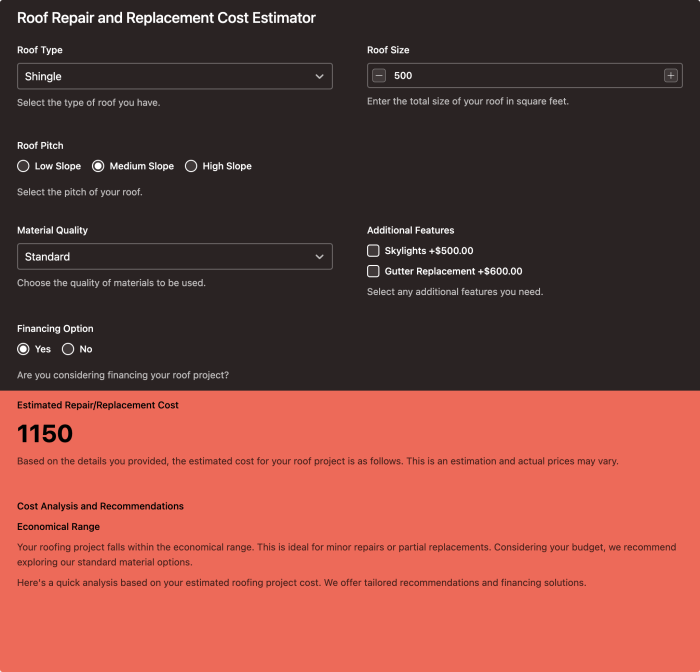
Wrapping up our exploration of estimating roof repair costs, we have unraveled the complexities and provided a roadmap for navigating this crucial task effectively. Armed with this knowledge, homeowners can approach roof repairs with confidence and clarity.
Helpful Answers
What factors can affect roof repair costs?
Factors like materials used, extent of damage, and labor costs play a significant role in determining the overall expenses of roof repairs.
How can I obtain accurate quotes from contractors?
To get precise quotes, it's advisable to request detailed estimates from multiple contractors, ensuring that all aspects of the repair job are thoroughly assessed.
Why is a contingency fund important in budgeting for roof repairs?
Including a contingency fund is crucial as it helps cover unforeseen expenses that may arise during the repair process, providing a safety net for unexpected costs.